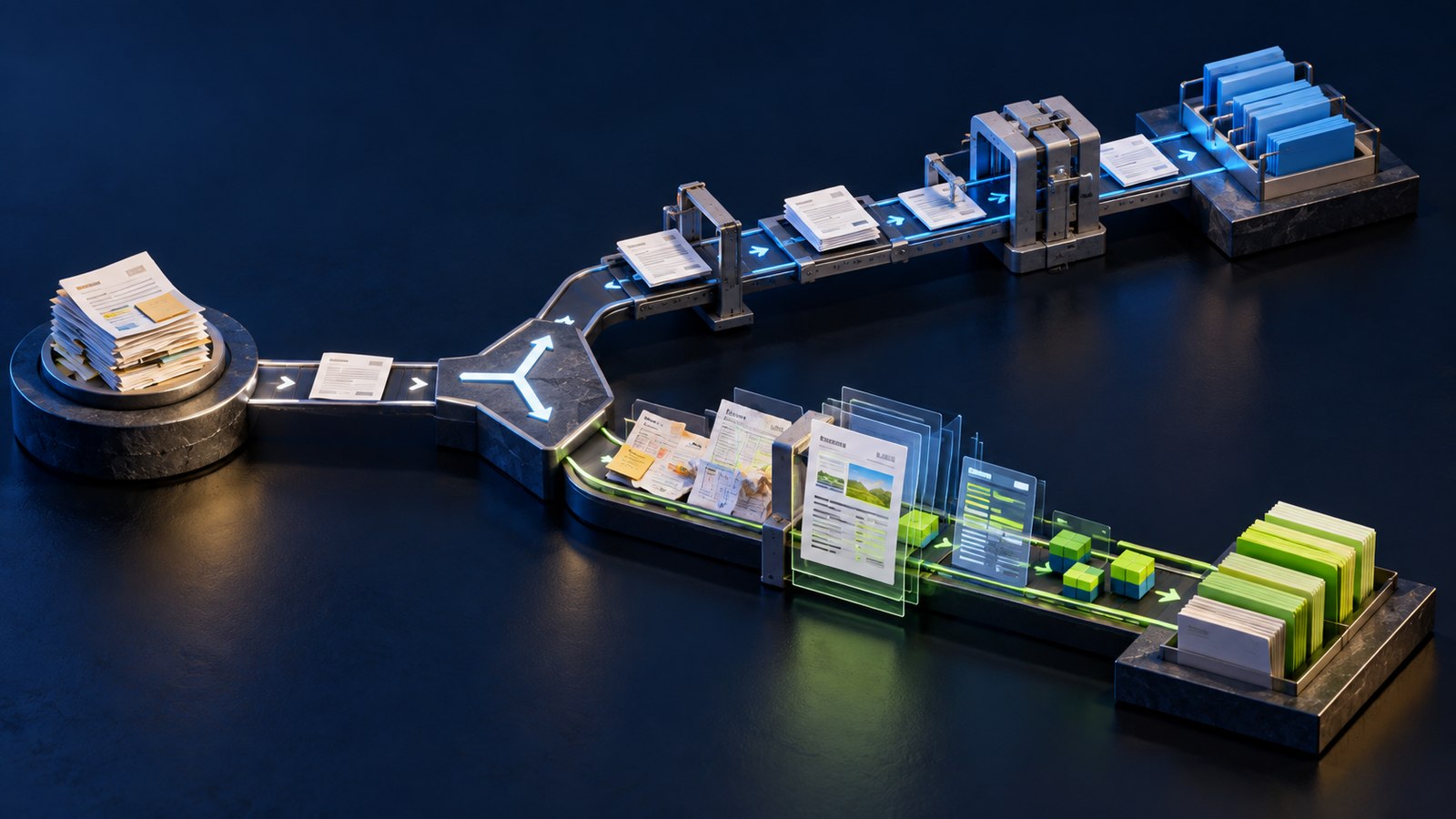
RPA is useful when a process follows stable rules in predictable interfaces. Intelligent automation can handle more variation, such as classifying a document or extracting information from an unfamiliar layout. Neither approach repairs a process that is unclear, unnecessary or full of exceptions.
A finance team used to copy figures from a web portal into a spreadsheet. A screen-based bot could remove the clicks, but the portal occasionally changed column order. A more durable solution might use a documented API; if that is unavailable, the bot needs validation and an owner who can respond when the screen changes. Automating clicks is only one part of the solution.
Map the work before automating
Watch several real cases from start to finish. Separate repeatable steps, judgment calls, missing information and handoffs. If staff routinely correct source data or invent workarounds, resolve those issues before asking software to mimic the clicks.
A useful selection workshop can place each process step on a board: structured input, variable document, judgment, approval and exception. Use an API or rule where the action is well-defined; consider document intelligence only for the variable part. Preserve the human approval where responsibility demands it. This decomposition often reveals that a process needs several modest components rather than one large “intelligent automation” platform.
Match the technique to the task
Rules and API integrations can move structured records reliably. RPA may be practical where a system has no usable interface for integration, but screen changes create maintenance work. Document understanding can help with varied inputs, but uncertain extraction needs validation and a fallback path.
Count the exceptions
Measure how many cases run straight through and how many require review. Define what happens when an automation fails mid-process, duplicates an action or encounters a new form. A smaller, transparent automation with well-designed exception handling often delivers more value than a broad unattended workflow that staff cannot trust.