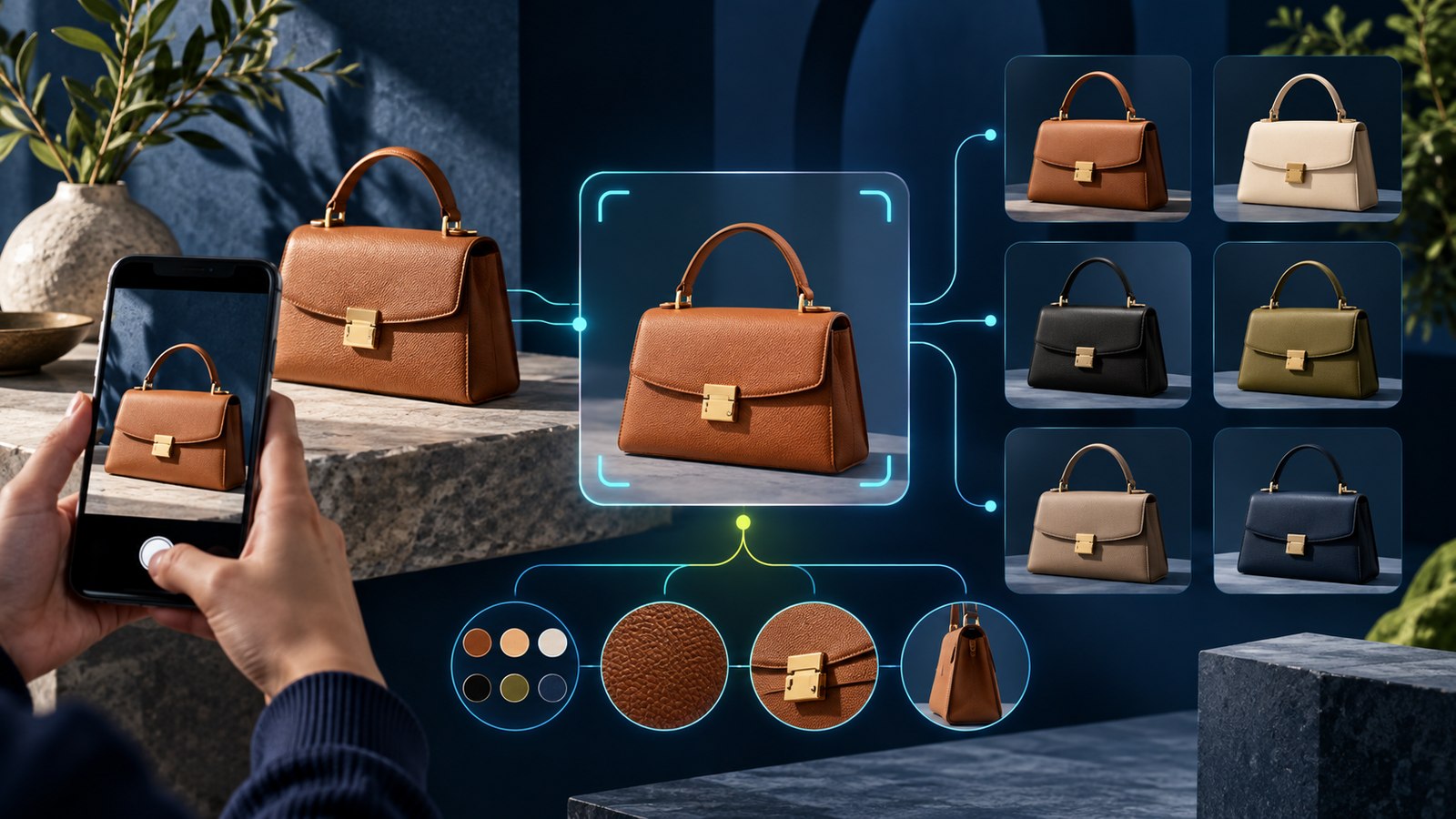
Someone photographs a chair in a café and wants to find something similar in a store. Visual search sounds simple until the photographed object has poor lighting, a busy background and no exact match in the catalog.
A customer uploads a photo of a tan leather chair. The nearest image match is a tan handbag, because color dominates the similarity score. Merchandising attributes such as category and dimensions can keep the result useful. The search team should review queries like this with real shoppers and catalog staff, then decide how image similarity and structured filters work together.
Decide what “similar” means
For one shopper it means the same color; for another, silhouette, material or price range. Translate that into product attributes and tests. A furniture catalog may need dimensions and style; fashion may depend on cut and pattern. A visual similarity score without stock availability or useful filters can still produce a frustrating result.
For evaluation, ask shoppers to judge a small set of results from their own photographs. Include “no good match” as an acceptable answer. Monitor whether visual search helps users discover products that text search missed, and whether it increases returns because similarity was mistaken for compatibility. The merchandising team should be able to adjust ranking when a collection changes. Visual search is a new doorway into a catalog, not a substitute for catalog quality.
Prepare the catalog and images
Use clear product imagery across angles and variants. Deduplicate nearly identical listings and maintain structured attributes that can support ranking. Test real customer photos, not only polished catalog shots. Look at difficult examples: cropped objects, reflections, mixed products and seasonal inventory changes.
Measure the shopping outcome
Evaluate relevance with human judgments, then follow the journey to product views, add-to-cart and purchase. Compare against a strong text search baseline and make it easy to refine a visual result with words or filters. If the system is uncertain, show sensible alternatives instead of claiming an exact match. The aim is to shorten discovery without taking control away from the shopper.