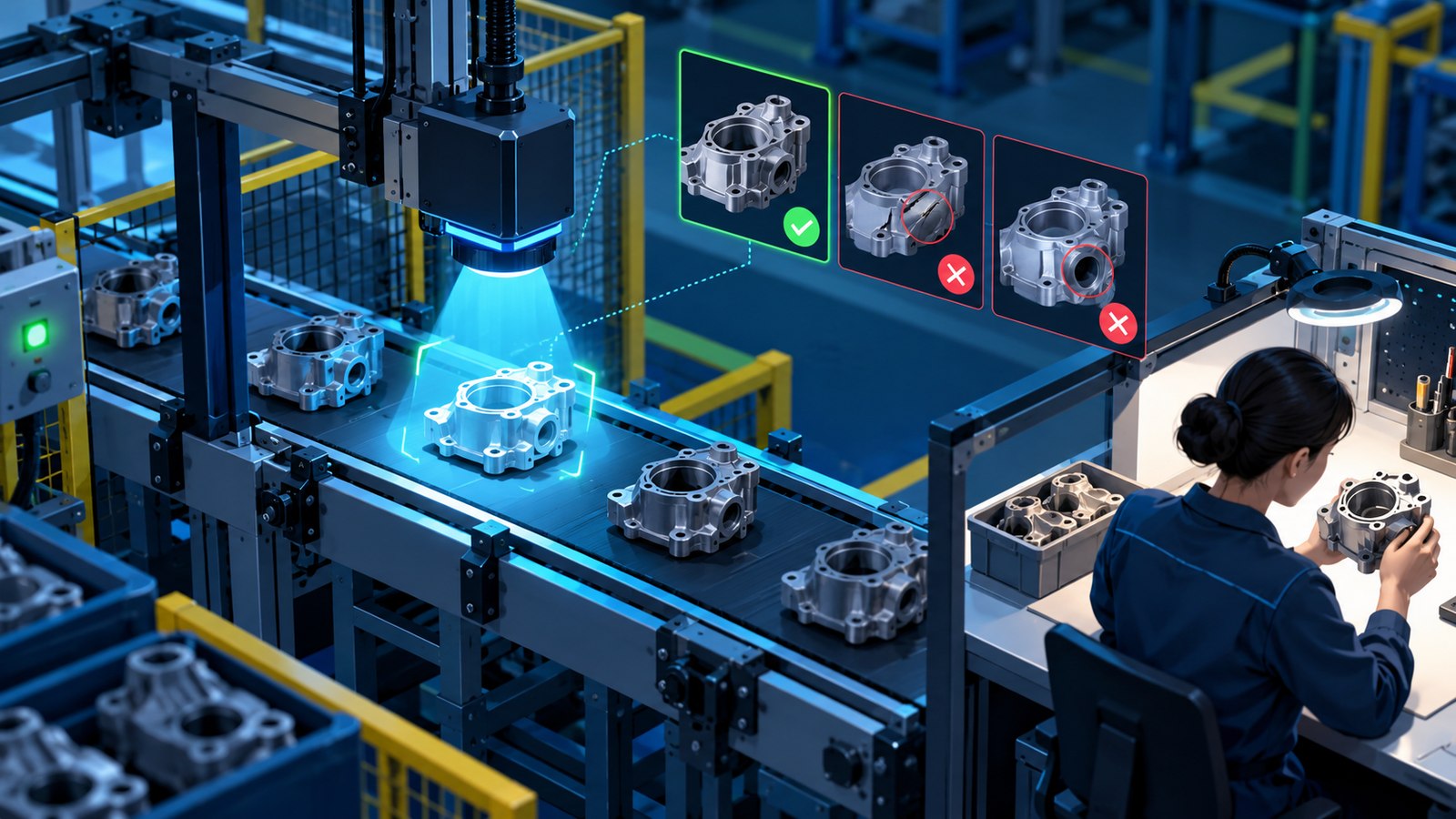
Computer vision can inspect a production image in milliseconds, but a fast answer is not automatically a reliable one. Glare, camera angle, a new supplier's packaging or a change in lighting can turn a promising demonstration into a stream of false alarms.
At a plant making reflective metal parts, a camera moved a few centimeters during maintenance. A model that had worked well on last month's samples began flagging normal products. The lesson is not that vision models are inherently fragile; it is that camera geometry and lighting are part of the production system. Include those conditions in acceptance tests, document the approved setup and make a drift check part of routine maintenance.
Define the task narrowly
“Detect defects” is too vague. Identify the product, defect types, camera position and decision that follows a flag. A scratched surface and a missing component may need different image resolution and different tolerance for mistakes. Include examples of acceptable variation as well as failures.
A pilot plan should say what happens after a flag. If an operator must inspect the item, how long can the line wait? If an image is unavailable, does the process fall back to normal inspection? Check results separately for each defect and product variant, not only as one average. Keep the inspection standard stable so a change in quality policy is not mistaken for a model improvement. These operational details often determine whether the system creates value.
Build a representative evaluation set
Collect images from different shifts, machines and conditions. Keep a test set separate from model development. Review labeling disagreements with the people who know the process; a model cannot learn a standard that inspectors themselves interpret differently. Measure missed defects and false flags separately, because their costs differ.
Design the surrounding workflow
An alert needs an operator response, a way to override a result and a record of what happened. Monitor camera changes and product variants after deployment. Where a quality decision has serious consequences, human review and escalation must be part of the design. The pilot is successful when the whole inspection process becomes more dependable, not merely when a model scores well on a curated image set.