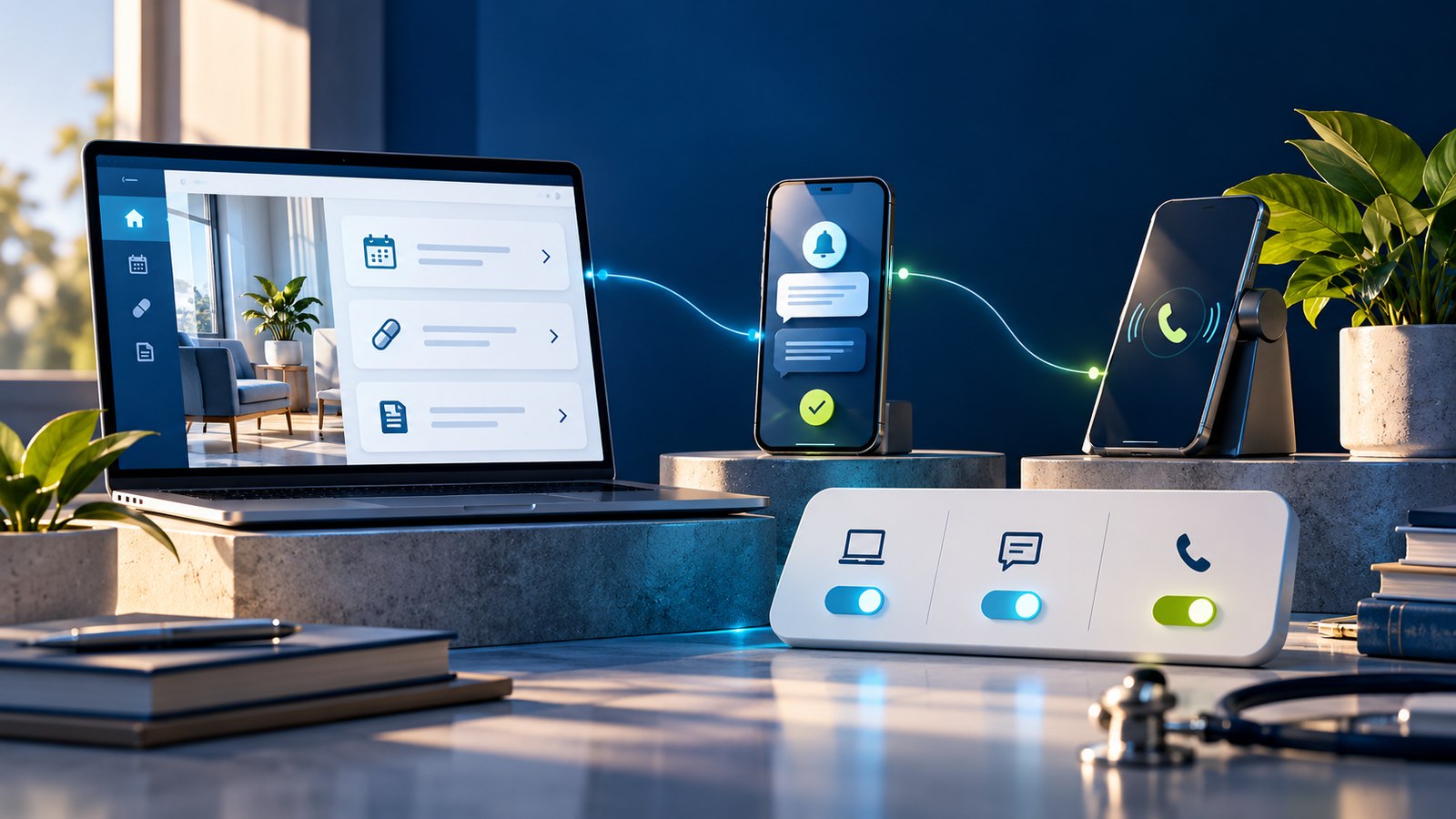
A patient may begin with a web enquiry, receive an appointment reminder by message and later need a phone call about preparation. A useful communication program makes those steps coherent and respectful.
An appointment reminder sent to a shared family phone can unintentionally reveal sensitive details. Sometimes a neutral notice to check a secure portal is more appropriate. The choice depends on the purpose, channel and the organization's privacy review.
Map the care journey
Identify what information is needed before, during and after an appointment. Clarify who sends each message and which questions need a clinician or care team rather than an automated response.
Patient communication also needs a response owner. If a message invites questions, who reads them and when? An automated reminder that cannot handle a reply may create more calls and uncertainty. Measure whether people understood the instructions and could act on them, especially where language or accessibility needs differ.
Respect preferences and privacy
Confirm contact details, channel choices and suitable message content. A notification visible on a shared device should not reveal more than necessary. Provide a straightforward way to ask for help or reschedule.
Measure comprehension and access
Watch missed appointments, repeated calls, unanswered questions and feedback across different patient groups. Test language and accessibility with real users. Success is a patient who understands the next step and can reach the right team, not simply a larger volume of messages.